 by
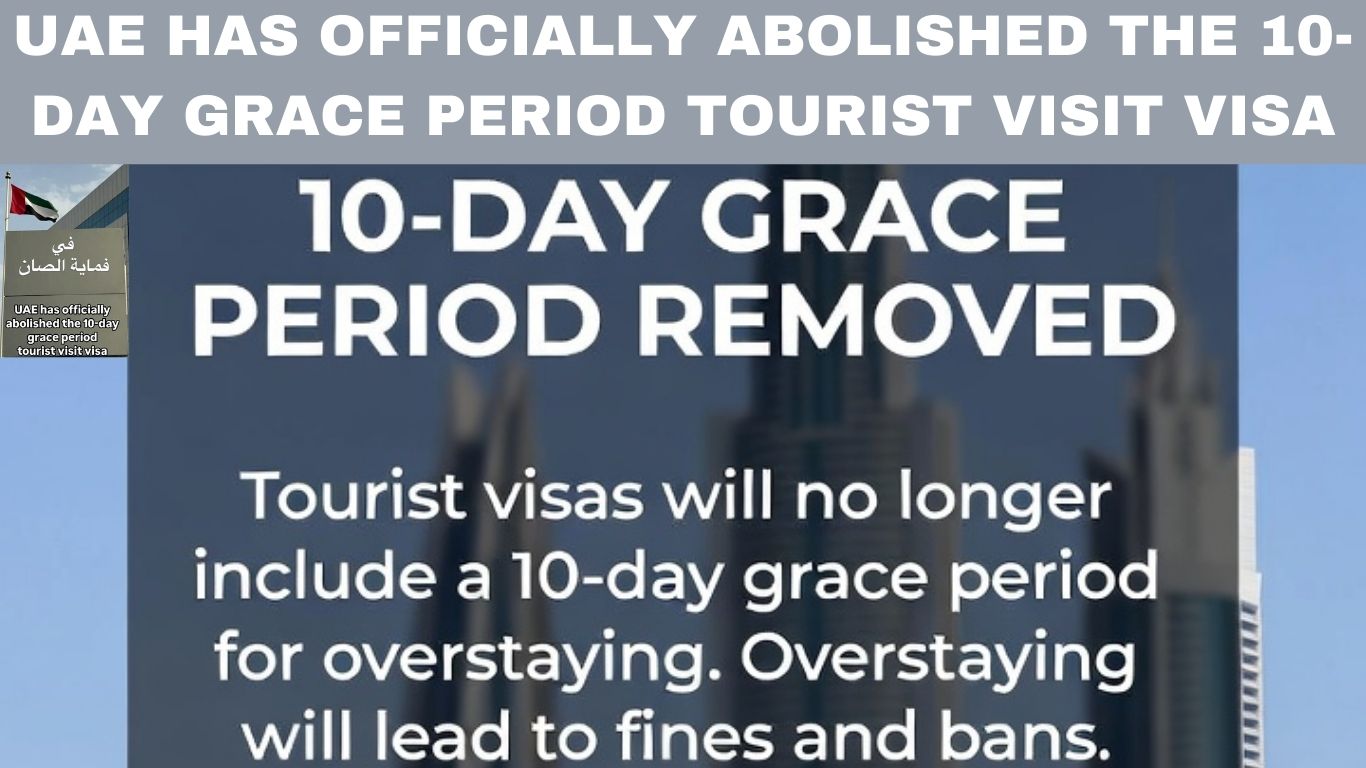
by The United Arab Emirates has long been a magnet for global talent, entrepreneurs, and tourists, renowned for its visionary policies and dynamic economy. A key feature of its immigration system for years was the 10-day grace period that followed the expiration of a tourist or visit visa. This buffer allowed individuals a window to legally wrap up their affairs, finalize travel plans, or extend their stay without immediately falling into violation. UAE has officially abolished the 10-day grace period tourist visit visa
However, in a significant shift that marks a new chapter in the nation’s immigration governance, the UAE authorities have officially abolished this 10-day grace period.
This change has sent ripples through the expat and tourist community, sparking questions, concerns, and a pressing need for clarity. If you are planning a trip to Dubai, Abu Dhabi, or any other emirate, or if you have friends or family visiting, understanding this new rule is not just important—it is absolutely critical to avoid severe penalties.
This comprehensive guide will break down everything you need to know: the reasons behind the change, what it means for you, the exact fines you could face, and, most importantly, your options for staying compliant with the law.
What Was the 10-Day Grace Period?
First, let’s rewind. For context, the grace period was a provision that allowed holders of expired 30-day or 90-day visit visas to remain in the country for an additional 10 days after their visa’s expiry date. During these 10 days, they were not considered illegal residents. It was a humanitarian and practical measure designed to give people time to:
- Book new flight tickets without a last-minute rush.
- Handle unexpected delays in travel plans.
- Officially renew or change their visa status without being pressured for time.
- Simply tie up loose ends before departing.
This grace period is now a thing of the past.
The New Rule: Zero Tolerance on Overstaying
The UAE government, through the Federal Authority for Identity, Citizenship, Customs, and Ports Security (ICP), has eliminated this leeway. The policy is now starkly simple:
Your legal stay in the UAE expires exactly on the date printed on your entry permit or visa. Any stay beyond that date, even for a single day, is considered an violation, and fines will begin to accrue immediately.
There is no more automatic 10-day window. The moment your visa expires, the clock starts ticking on daily fines.
Why Was the Grace Period Removed?
While official statements emphasize streamlining procedures and enhancing security, immigration experts point to several logical reasons:
- Clearer Immigration Controls: Removing ambiguity creates a stricter, more transparent system. It eliminates any confusion about a traveler’s legal status on any given day.
- Encouraging Proactive Action: The rule incentivizes visitors to be proactive about their visa status. Instead of relying on a grace period, individuals are now motivated to apply for extensions well before their current visa expires.
- Revenue Generation: The fines from overstaying are a source of government revenue. By starting fines immediately, the state minimizes revenue loss from the previously free grace period.
- Aligning with Advanced Systems: As the UAE rolls out more advanced digital platforms for visa applications (like the ICP app and website), the process of renewing or applying for new visas has become faster and more efficient, theoretically reducing the need for a lengthy grace period.
The Cost of Non-Compliance: Understanding the Fee and Fine Structure
This is the most crucial part of the new rule. The fines for overstaying are substantial and accumulate daily, making even a short oversight an expensive mistake.
The fines are standardized across the UAE but are typically levied by the respective General Directorate of Residency and Foreigners Affairs (GDRFA) of each emirate (e.g., Dubai, Abu Dhabi). Here is a detailed breakdown:
Daily Overstaying Fine Breakdown
| Violation Type | Fine | Fine per Day | Extra Fee & Note |
|---|---|---|---|
| Overstaying a Visit/Tourist Visa | 200 AED | 50 AED per day | – This is the primary fine. – A 100 AED “Service Fee” is often added by typing centers or online portals when paying. – A 100 AED “Knowledge Dirham” and 100 AED “Innovation Dirham” are mandatory federal fees. |
| Overstaying other Visa Types | Varies | Varies | Fines for overstaying on employment, residence, or other visa categories follow a different, often higher, fee structure. |
Example Calculation: The Real Cost of a Short Overstay
Let’s say your 30-day tourist visa expired on October 1st, and you realized your mistake and departed on October 5th. This means you overstayed for 4 days.
Your total fine would be calculated as follows:
- First Day Fine (Oct 2nd): 200 AED
- Subsequent Days (Oct 3rd, 4th, 5th): 3 days x 50 AED = 150 AED
- Subtotal of Overstay Fines: 200 AED + 150 AED = 350 AED
- Service Fee: + 100 AED
- Fees for Knowledge and Innovation: + 200 AED (100 AED + 100 AED)
- Estimated Total Fine for 4 Days: 650 AED (approx. $177 USD)
And this accumulates every single day. A two-week overstay could easily cost over 2,000 AED.
Airport Departure Fines:
It is imperative to settle these fines before you go to the airport. If you arrive at the airport with an outstanding overstay fine, you will not be allowed to check in for your flight until it is paid in full. Airlines are integrated with the immigration system and will be aware of your status.
Your Action Plan: How to Avoid Fines and Stay Legal
The abolition of the grace period means you must be vigilant. Here’s your step-by-step action plan.
1. Know Your Visa Expiry Date
This might seem clear, but it’s the most important rule. As soon as you get your visa (via email or stamped in your passport), note the expiry date in your calendar and set multiple reminders for a week before and a day before.
2. The Golden Rule: Renew or Exit Early
Do not wait until the last day. Initiate the renewal process at least 5-7 working days before your visa expires. This buffers you against any technical glitches, public holidays, or processing delays.
3. Explore Your Legal Options Before Expiry
You have two main legal paths to choose from:
- Option A: Renew Your Tourist Visa (Inside the UAE)
This is the most common solution for those who wish to extend their stay. The process is almost entirely online through official government portals:- For Dubai: Use the GDRFA Dubai website or app.
- For Other Emirates (Abu Dhabi, Sharjah, etc.): Use the Federal ICP website (icp.gov.ae) or app.
- 30-day extension: This can typically be done once without needing to exit the country.
- 90-day extension: Availability and requirements can vary.
- Passport copy (with at least 6 months validity).
- Passport-size photograph.
- Confirmed hotel booking for the duration of the extended stay (this is often a new, stricter requirement).
- Proof of health insurance that is valid in the UAE.
- The applicable fee (detailed below).
- Option B: Exit the Country Before Expiry
The simplest way to avoid any fine is to leave on or before the expiry date. You can then apply for a new visa from your home country and re-enter if you wish.
4. The “Visa Run” Option (Exit and Re-enter)
If you are unable to renew from inside the UAE or need a longer stay, a “visa run” is a traditional method. This involves:
- Leaving the UAE before your visa expires (often via a short drive to a neighboring country like Oman).
- Applying for a brand-new tourist visa from outside the UAE.
- Re-entering once the new visa is approved.
Warning: Immigration authorities are increasingly scrutinizing frequent “visa runs.” There is no official limit, but doing this repeatedly may raise flags and lead to future applications being denied. This should not be seen as a strategy for the long term.
Visa Extension Fee Table (Estimated)
The fees for renewing a tourist visa from inside the UAE are significantly cheaper than paying overstay fines. These are approximate costs and can vary slightly based on service provider fees.
| Visa Type | Application Fee (ICP/GDRFA) | Issue Fee | e-Service Fee | Knowledge & Innovation | Typing Center Fee (if used) | **Estimated Total |
The UAE has abolished the standard 10-day grace period
Here is a breakdown of the current situation:
1. The End of the Grace Period
- What changed: Before this change, tourists on a 30-day or 90-day visit visa were given a 10-day grace period after their visa expired to legally exit the country without incurring a fine.
- Current Rule: This grace period no longer exists. The visa’s expiry date is now the final day you are permitted to stay in the country. Overstaying, even by one day, will result in fines.
2. Overstaying Fines (Fee Table)
The fines for overstaying are applied on a per day basis. The standard fine is:
| Overstay Period | Fine (per day) |
|---|---|
| First Day after Expiry | 50 AED |
| Each Subsequent Day | 50 AED |
Important Note: There is often a small additional administration fee (around 10-20 AED) charged on top of the daily fine when you process your exit. These fines must be paid in full at the airport or border crossing before you are allowed to leave the country.
3. Hotel Booking Requirement
The requirement for a hotel booking is typically part of the visa application process, not the overstaying rules.
- When you apply for a UAE tourist visa, one of the standard required documents is proof of accommodation (e.g., a hotel booking confirmation for the duration of your stay or a relative’s/friend’s accommodation guarantee).
- This requirement has not changed and is still in effect for obtaining the visa.
Summary of Key Points:
- No More Grace: Your visa is valid only until its printed expiry date.
- Fines Start Immediately: A fine of 50 AED per day is levied from the first day you overstay.
- Pay to Leave: All fines must be cleared at the immigration counter before departure.
- Hotel Booking: This is for the visa application, not related to the overstay rules.
What You Should Do:
To avoid any issues or unnecessary expenses:
- Check your visa expiry date carefully upon arrival and before your trip.
- Plan your departure to occur on or before the expiry date printed on your visa.
- If your plans change and you need to stay longer, apply for a visa extension well before your current visa expires through the official channels (ICA UAE website, authorized typing centers, or your travel agent). Do not assume you can overstay and just pay the fine.
For the most authoritative and up-to-date information, always refer to the official sources:
- The Federal Authority for Identity, Citizenship, Customs, and Ports Security (ICP) is responsible for managing identity documents, citizenship matters, customs regulations, and security at ports: https://icp.gov.ae/
- General Directorate of Residency and Foreigners Affairs (GDRFA) of the specific emirate you are in (e.g., Dubai).
I hope this clears up the situation! It’s crucial to be aware of these rules to ensure a smooth and hassle-free visit to the UAE.